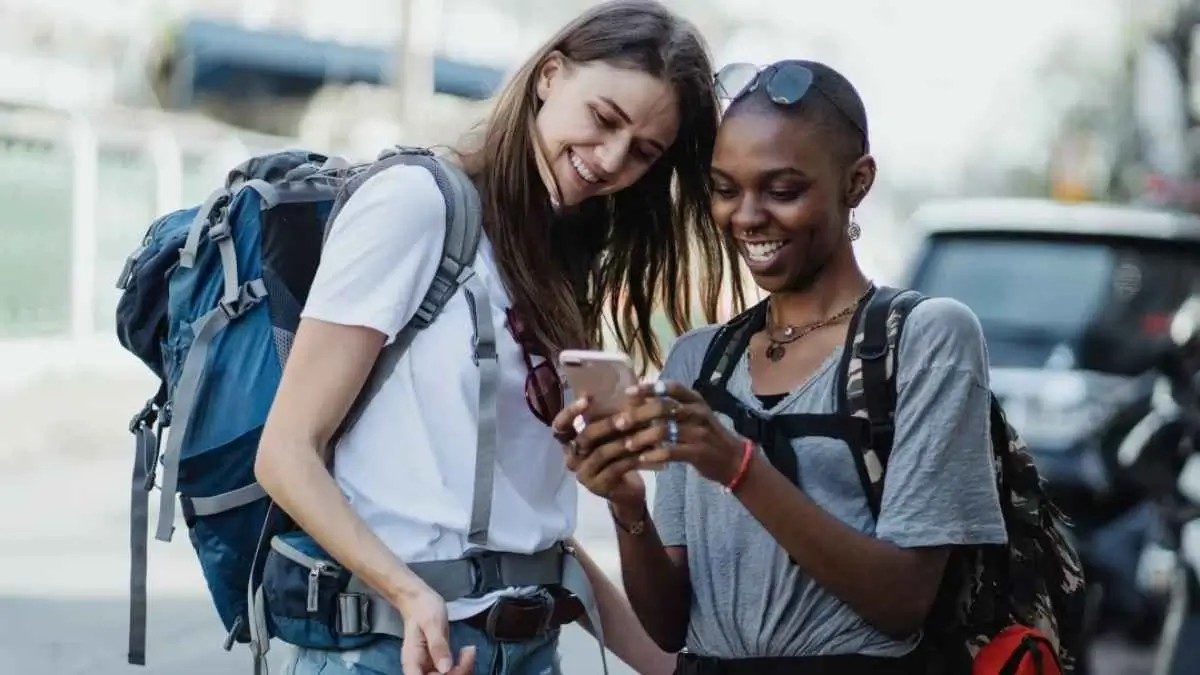
Travel was once a privilege related to honeymoons or holidays and the likes of retiring or the family vacation taken between school breaks and the working schedule. But the story is completely revised or rather the way of thinking is changing. When you ask a twenty-something what they’re saving up for, besides a house or a car, the most common answer nowadays will probably be one of the exciting and thrilling journeys like backpacking in Southeast Asia or a solo road trip through the Himalayas. The younger generation is not just traveling more, they are living to travel. Explaining that needs more than looking at “wanderlust” as a clutch and we have to consider the deeper changes in culture, economy, and psychology at the heart of this trend.
The Death of the “Someday” Mentality
One of the most significant changes we’ve seen is in the philosophical direction. Earlier generations were taught to put off the enjoyment of life by working hard at first, saving all sorts of fun for later, when you’ve really “bought” the vacation with years of labor. The millennials and Gen Z, who live in such a world that is marked by recessions, pandemics, and climate change anxiety, have come to understand, quite painfully, that there is no guarantee for their plans of “later on”: life doesn’t give a choice.
Experiences Over Possessions
Economists and sociologists have long noticed a turn from materialism towards experientialism, and the best illustration of that is found in the way young people spend their extra income. Having a car or designer clothes as symbols of status is rapidly losing its appeal; on the contrary, a passport that carries dozens of stamps from different countries is much more attractive.
It’s about the whole lifestyle that these experiences represent besides the superficial status that these things give us alone – behavioral psychology studies show how much experiences contribute to a longlasting happy feeling compared to things, and that’s because the experiences don’t succumb to the effects of comparison and depreciation. For instance, even though you can still make good comparisons two years later when it comes to a phone, a phone still will become obsolete, while the memory of the sunrise at Machu Picchu will still be fresh.
The Social Media Multiplier
To be honest, talking about this trend without recognizing the part played by Instagram, TikTok, and similar platforms would mean being disingenuous. It has been made very visual, shareable, and has taken the form of a travel show which is essentially a mix of videos of a tourist destination shot in an aspirational way and travel logs of a normal person made more colorful and exciting by adding little twists here and there. Some people criticize these acts as ‘performative tourism’, a sort of tourism which is photo-driven at expense of having good traveling experience.
I can see some merit in saying that. But it’s just partly valid. Social media, in fact, has brought down the barrier of being inspired to travel by making travel ideas and plans accessible to many young people. Social platforms are usually blamed for being shallow, for instance, they have little or no consideration of things beyond appearance. Still, once people use the information and actually see the places, it becomes a really life-changing experience for them.
Remote Work and the Collapse of Geography
Remote, as well as hybrid work, has subtly done away with one of tourism’s big historical barriers: the tyranny of the office. The “digital nomad” has become a very common lifestyle choice besides being just an alternative subculture which it was, thanks to a combination of laptops, stable Wi-Fi, and companies that are more lenient in judging by the result rather than by office hours. To the generation whose expectation to be flexible is their default rather than a luxury, the question will not be “can I travel and work still?” but “why would I choose to stay?!”
Education Through Immersion
An under-reported, less visible change is growing doubt and rejection towards conventional signs or measures of education. Although formal schooling is still held in high regard, it is not anymore considered just a way – or perhaps even the dominant way – to achieve development. Young backpackers quite often describe their trips as an adventure in learning. For instance, through learning negotiation skills in a Moroccan market; by getting to know history in a literal way by walking through it in Berlin or Hiroshima; or even by training one’s resilience by confronting the chaos of missed trains and difficulties in communication. As travel becomes a substitute for school, it is a way of learning that has no fixed curriculum or examination system, but it does result in a skill most highly appreciated by today’s employers – versatility.
A Generation Redefining Success
At the end of the day, the increase in youth travel demonstrates that young people now perceive a “successful life” in different ways that include more travel and life experiences. The old story line: learn work get married, buy a house and retire – this has been substituted with one that is more flexible and can be shaped by individuals themselves. Tourism is in harmony with the new story because it encourages memorizing events rather than collecting things, and being better through life experiences instead of reaching life milestones.