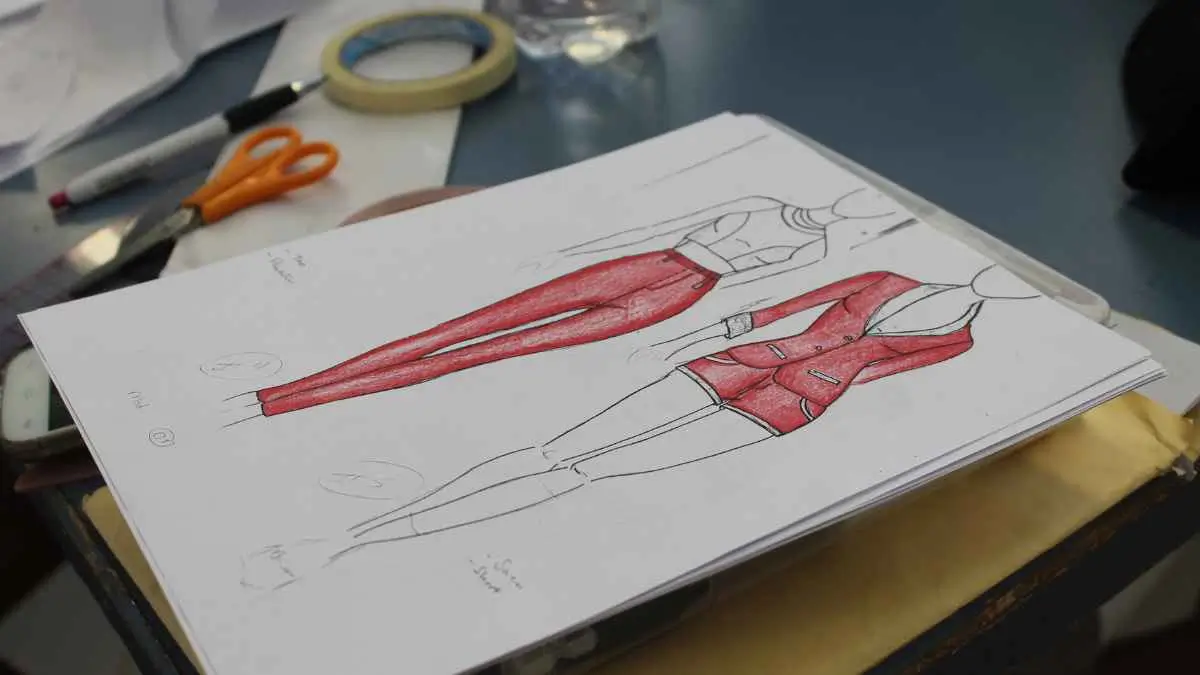
Fashion drawing is the fusion of creativity and technique, the preliminary expression of a designer’s imagination on paper, long before any fabric has been cut or a needle has even been picked up. One of the oldest and most fundamental disciplines in the fashion field, it connects the thought bubble in the creator’s mind to the end product on the catwalk or in a boutique. Fashion drawing is not simply a set of technical specifications, it is also an art in itself. The pictures convey body proportions gestures character and overall style that words alone cannot. If you are a future fashion designer, an arts student or just someone who enjoys exploring the dynamic interplay between clothes and imaginative power, you will find that your ability to draw fashion will be your gateway to a realm of creative possibilities.
A Brief History of Fashion Illustration
Fashion illustration holds a heritage just as fashionable. At an age when photography had not yet been a common practice for recording clothes, artists drew sketches to represent the latest styles through which the upper class and fashion periodicals could be kept informed. Fashion plates, exquisite engravings or lithographs depicting people in costumes, were used as a reference book to aristocratic and working class ladies on what was appropriate and on trend in Western Europe, seventeenth and eighteenth centuries. By the very first decade of the twentieth century, fashion illustration had reached an artistic level that few people had ever seen before. The fashion illustrators such as rot, Ren Gruau and Antonio Lopez have become household names because of the beautiful, elegant, and powerful images that they created which have stood the test of time till today. Skillfully drawn, elegant line figures in fashion illustrations used to be preferred over photographs not only for magazine covers but also for editorial spreads during this age, which lasted more or less till the mid-twentieth century. Still photography eventually became the favorite media for fashion presentation but the field never ceased to exist, it adapted, modernized and currently is on an exciting comeback fueled by social media and a fresh respect for handmade artistry.
The Fashion Figure: Proportions Explained
The fashion figure, or croquis, is at the heart of fashion drawing. It is a stylized human body template that is created to best show off clothing. Fashion figures are deliberately elongated, not drawn in the proportions used in life drawing. A typical fashion figure is nine to ten heads tall, whereas the real human body is seven to seven-and-a-half heads tall. The elongation gives a feeling of height, drama and elegance that flatters garments and lends an aspirational, graceful quality to designs on the page. The fashion figure is not meant to be a realistic depiction of the human body; it is an idealized canvas that exists to serve the clothes, not to document the person wearing them.
Learning how to draw the fashion figure takes practice, and a knowledge of basic anatomical landmarks — the shoulder line, the bust, the waist, the hip, the knee and the foot — and how they shift and relate to each other when the figure is in motion or in a particular pose. The dynamism of a pose, with the weight of the figure on one hip and the limbs moving with natural energy, can bring life and personality to fashion drawings in a way that stiff frontal poses cannot. The fashion illustrator who has mastered a variety of poses — walking, turning, standing at rest — is flexible enough to show any garment at its most flattering and expressive angle.
Basic Tools & Materials
Drawing fashion illustrations is an artistic activity that even beginners get easily into as this basically does not require many items. You just need a pencil, an erase and some kind of sketchbook that is convenient for you. As the pencil goes from soft to hard, you will be able to produce different kinds of work that include making light lines on the sketch and then going in with strong, confident strokes of the lines for the finished illustration. Pens and markers are commonly used for outlining pencil drawings with great accuracy and precision so that they are crisp and remain so even after coloring. With fashion illustrations, colored markers are popular as they produce smooth and rich colors and the most effective combination of these is probably Copic’s alcohol-based markers which give a very professional looking work and a deep and textured surface without needing very intensive efforts.
Watercolors are more luminous, subtle, and have a soft quality. It is Mainly appropriate for rendering extremely delicate and transparent fabrics like chiffon, organza or silks. Colored pencils are ideal for showing texture and fine details of fabrics like tweed, denim or knit. With digital tools like drawing tablets and apps such as Procreate or Adobe Illustrator, digital illustrations got an extra dimension. The advantages include working with layers, making color adjustments and creating an absolutely clean final product presentation ready to be delivered professionally Today most fashion illustrators prefer traditional and digital work combination. This allows them to retain the human-like touch of hand drawn elements while taking advantage of the accuracy and efficiency features of digital tools for finishing.
Texture & Fabric Drawing
Rendering fabrics and surfaces is one of the most remarkable and difficult aspects in fashion sketching. Clothes are more than mere shapes – they have weight drape sheen and a surface character. Capturing all these features of materials is what turns an average, dull drawing into a really good illustration. A heavy wool blazer will look totally different than a flowing, bias-cut satin dress and the illustrator should depict that difference in the way they make the marks on paper. Stiff fabrics hold their shape, they stay away from the body with crisp folds and clean edges. Draped garments adhere to the body, they flow and bunch in softer, more natural lines. Fabrics that are shiny (such leather and silk), should have strong highlights and shadows whereas less lustrous fabrics such cotton and felt need to be expressed with more even and subdued changes of tone.
Finding Your Own Style
Technical skill is the foundation of the fashion illustration, but it’s the personal style that makes an illustrator’s work memorable—and marketable. The greatest fashion illustrators in history have developed a unique visual language, a unique way of drawing a face, a unique quality of line, a unique use of color that makes their work instantly recognizable. You can’t create your own style on demand, it will come naturally through constant practice, extensive visual research and an honest expression of your own aesthetic sensibilities and influences. 1. Draw regularly. 2. Study the work of illustrators you admire. 3. Experiment freely, without the pressure of producing perfect results. These are the conditions for a genuine personal style to take root and grow.
Summary
Fashion drawing is a skill, an art and a language – one that speaks directly to the beauty, ambition and creativity at the heart of the fashion world. Professional tool or personal passion, it rewards patience and observation and a willingness to fill sketchbook after sketchbook with imperfect attempts that become more and more fluent and confident. All great fashion illustrators started with a single tentative line on a blank page. Anyone who is willing to pick up a pencil and start, is welcome to start.