Sleep technology mainly is looking at standard measurement. Oura and Eight Sleep offer a glimpse of how wellness technology is integrating continuous self-management, state-of-the-art temperature regulation, and tailored advice with machine learning. Before long, these, and similar startups are shaping the bedroom into a complex and connected wellness environment.
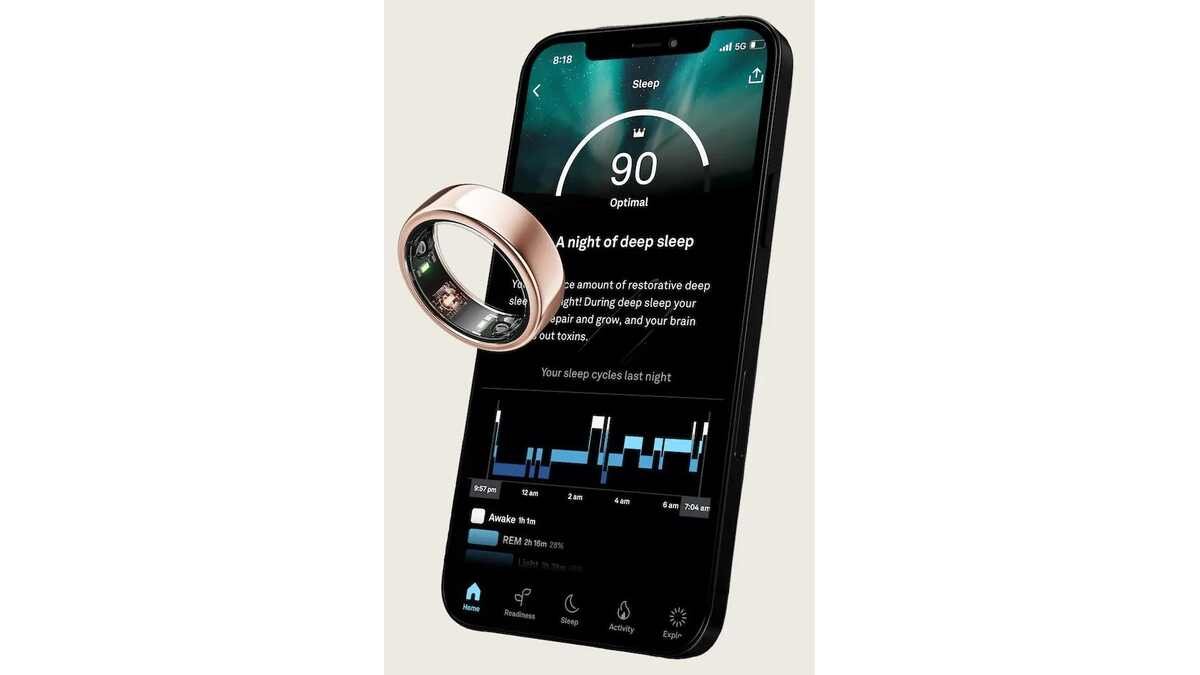
Oura has become a major player when it comes to smart rings, using its wearable to track sleep, recovery, activity, and physiological data. Its new software updates now improves its capabilities so you can track trends of sleep, readiness, stress, and body temperature. The device detects overnight skin-temperature fluctuations relative to your baseline and alerts you to any divergences that could be worth exploring further.
A key advantage of a smart ring over a smartwatch is that you can wear it discreetly all day, unlike a watch, which can be unsafe to wear while you sleep as well as being inconvenient. The current Oura Ring 4 collects continuous data with Oura’s Smart Sensing technology and then use the software to turn those metrics into long-term trends and personalized insights.
Oura is further developing the software ecosystem of its platform. For an initial period, the Bedtime Guidance feature brings the patient a recommended time to complete his final wake- and sleep time, by analyzing past trends of wake- and sleep times and rest heart rate. Recently, the company has expanded features like Health Radar and GLP-1 Insights to other countries, exemplifying the profile of wearable-to-big picture strategy.
Eight Sleep is taking a very different approach. Instead of adding technology to the body, it is integrating sensors and temperature management technology into the sleeping environment. Its latest Pod 6 system, for example, includes a temperature-controlled mattress cover plus a retooled Hub to automatically modify the temperature of the sleeping surface.
The Pod 6 is a major upgrade to the hardware. On its blog, Eight Sleep confirms that the new hardware features nine times as many biometric sensors compared to its previous generation. Covering 18 sensors are spanning across the cover, which is capable of tracking heart rate, heart-rate variability breathing movement, and sleep stages for both sides of the bed.
Temperature management is also a large aspect of the system. The thermal engine at the core of The Pod 6 is capable of 20% faster temperature change in the same approximate footprint of the Pod 5, and The Hub has shrunk by approximately 50% of the volume compared to the original Pod 5 so that it can be installed under more bed frames.
The product has been evolved in a standalone mode, with a new Pod 6 Solo version designed for unpartnered sleepers. The model starts at $1,999 for a Solo, and at $2,699 for a non-solo, which is astronomically high compared to the cost of sleeping on a regular bed or wearing a fitness device.
Perhaps the most fascinating aspect of all is the ways in which these technologies embody two sides of the same emerging sleep ecosystem. Oura’s main focus is body-side sensing, which gathers data on physiological states and sleep behavior.