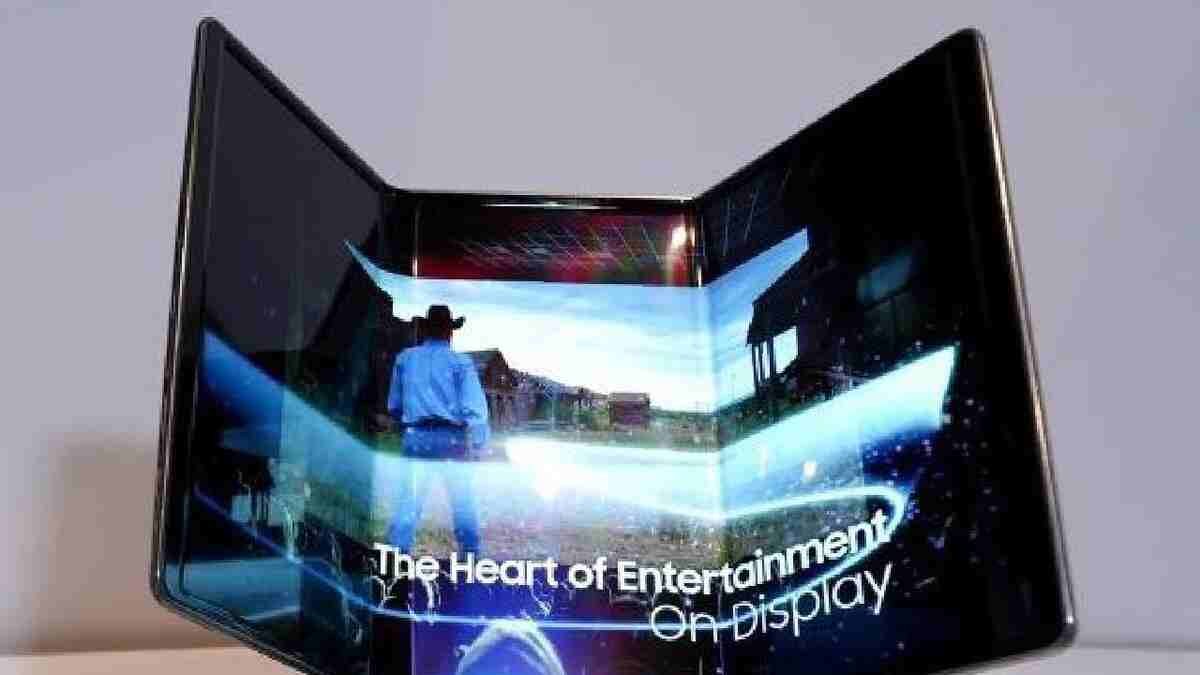
The smartphone industry is entering a bold new era, and Samsung is leading the charge with its revolutionary tri-fold smartphone concept. First showcased globally and gaining massive attention at CES 2026, the Galaxy Z TriFold is not just another foldable device but a glimpse into what the future of mobile computing could look like.
Unlike traditional foldable phones that bend once, the Galaxy Z TriFold features a dual-hinge mechanism that allows the device to fold in three sections. This design enables the phone to expand into a massive tablet-like screen while still maintaining a compact form when folded. When fully opened, the device offers an immersive display experience close to 10 inches, effectively turning a smartphone into a portable workstation.
This innovation is rooted in years of research and development. Samsung had been teasing tri-fold concepts like the Flex S and Flex G for several years before finally bringing the idea into a real product. The TriFold represents the culmination of those experiments, combining cutting-edge display technology with advanced engineering to create a device that pushes the limits of what a smartphone can be.
Under the hood, the Galaxy Z TriFold is built to perform like a flagship device. It is powered by a high-end Snapdragon processor and comes equipped with up to 16GB of RAM, ensuring smooth multitasking even when running multiple apps simultaneously. The device also features a powerful 200MP camera system, placing it firmly in the premium smartphone category.
One of the most impressive aspects of the TriFold is its battery system. Instead of relying on a single battery, Samsung has integrated a three-cell battery design distributed across the device’s panels. This allows for better power management and supports all-day usage despite the large display. With fast charging capabilities, the device is built to handle the demands of modern users who rely heavily on their smartphones for both work and entertainment.
However, the journey of the tri-fold smartphone has not been without challenges. Despite its groundbreaking design, the Galaxy Z TriFold was never intended to be a mass-market device. Its high price point, reportedly close to $2,900, and limited production made it more of a showcase product rather than a mainstream offering. In fact, reports indicate that Samsung has already begun winding down sales of the first-generation model just months after launch, highlighting the experimental nature of this innovation.
Still, the impact of the TriFold goes far beyond sales numbers. It represents a significant step forward in foldable technology, influencing the direction of future devices. At CES 2026, Samsung also demonstrated advancements such as crease-free OLED displays, signaling that the company is actively working to address one of the biggest limitations of foldable screens.
The competition in this space is also heating up. Companies like Huawei have already introduced their own tri-fold devices, while other tech giants are exploring similar concepts. This growing competition is expected to accelerate innovation, leading to more refined and accessible foldable devices in the coming years.
Looking ahead, Samsung is reportedly working on a next-generation TriFold model that could be thinner, lighter, and more durable. Improvements in hinge technology and display materials are expected to make future versions more practical for everyday use, potentially bringing tri-fold smartphones closer to the mainstream market.
The Galaxy Z TriFold is more than just a new gadget; it is a statement about where the smartphone industry is headed. As devices continue to evolve beyond traditional designs, the line between phones, tablets, and laptops is becoming increasingly blurred. Tri-fold technology could play a crucial role in shaping this future, offering users a single device that adapts to multiple needs.
While it may still be in its early stages, the tri-fold smartphone represents one of the most exciting innovations in recent years. It challenges conventional design, redefines usability, and opens the door to a new category of mobile devices. As technology continues to advance, what seems experimental today could soon become the standard for tomorrow’s smartphones.