Introduction
One of the quieter yet most consequential celebrity moments of 2025 arrived not on a red carpet, but between the covers of a book. The revised edition of The Power of the Actor, written by legendary acting coach Ivana Chubbuck, reentered the cultural bloodstream with remarkable force.
The launch unfolded like a whisper campaign among Hollywood’s most discerning performers. Aubrey Plaza appeared in conversation with Chubbuck at a Barnes & Noble event in New York. Halle Berry posted a now widely circulated photo of herself holding the book, crediting it with changing her life, joining Eva Mendes, Ali Larter, and others who quietly shared the release with their audiences. Kat Graham livestreamed a discussion about the book to her millions of followers.
The Title and the Legacy
The revised volume of The Power of the Actor itself reads like a living archive of modern performance, updated with stories from the many actors who have used the Chubbuck Technique across film, television, and theater. But it is the dedication that raises a different set of questions. At the front of the book, Chubbuck writes: “For Claire, you gave my journey purpose.” Throughout the text, she refers to her daughter as “the legacy that furthers the mission.”
The Chubbuck Technique and the Daughter Carrying it Forward
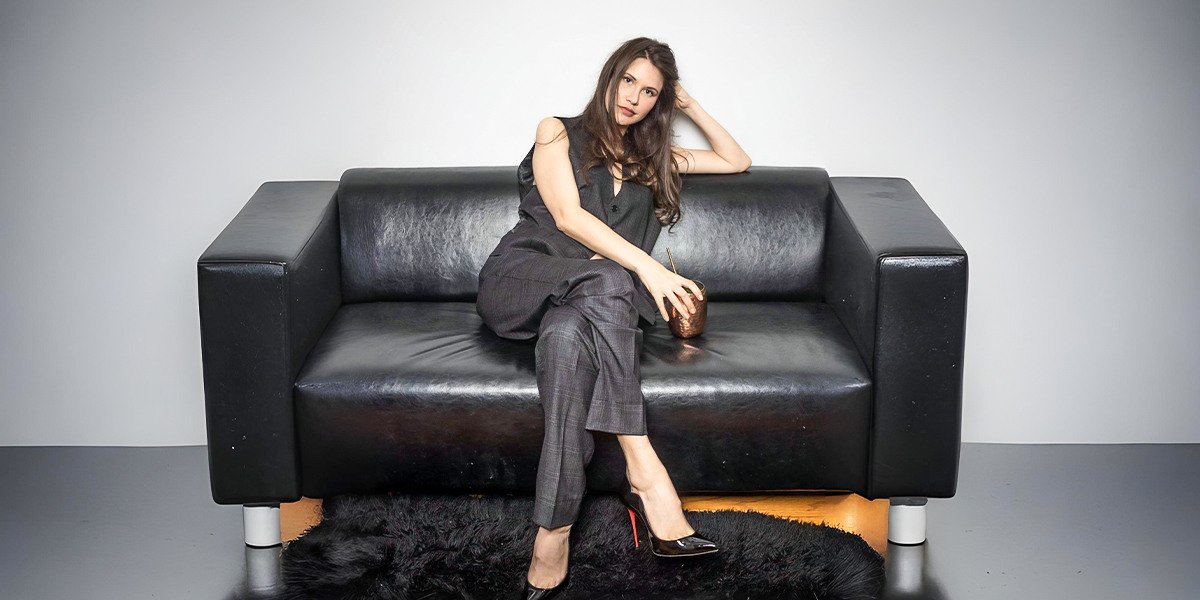
Which naturally begs the question: what is the Chubbuck Technique, really? And who is Claire Chubbuck, the woman positioned to carry it forward?
To understand the distinction, one must first discard the shorthand comparisons. From the outside, the Chubbuck Technique is often described as an evolution of Stanislavski with traces of Uta Hagen. Claire Chubbuck is quick to correct that assumption.
“The Chubbuck Technique is fundamentally different for two reasons,” she explains. “The first is motivation.”
The First Pillar
At its core, the technique insists that every character sees themselves as the hero of their own story. The work is not about playing damage or defeat, but about locating the internal logic that makes a character’s actions feel necessary, justified, and purposeful. “We are not interested in victims,” Claire says. “Even when a character appears powerless, they are still fighting to win something.”
Claire had a large list of examples, one of which was Monster, the film that earned Charlize Theron an Academy Award for her portrayal of Aileen Wuornos. Many viewers see Aileen as a tragic figure, even a lost cause. But that is not how the role was approached. “No one believes they are a loser,” Claire says. “People who believe they are losers are victims. And we do not play victims.”
The Second Pillar
The second pillar of the technique, and the one Claire describes as her personal obsession, is personalization. Traditional acting methods often encourage performers to mine their past for parallels to a character’s experience. Chubbuck does the opposite.
“In our work, personalization must be alive,” she explains. “If your character is talking about loss, we are not interested in a loss you have already processed. We want something unresolved. Something current. Something you do not know the ending to.”
This insistence on present emotional stakes is what gives the Chubbuck Technique its reputation for intensity and its results a distinctive charge. When actors work this way, performance becomes catharsis rather than imitation. Pain is not revisited, but transformed.
The Psychological Implications of The Chubbuck Technique
If Ivana Chubbuck built a method around empowerment, discipline, and survival, Claire Chubbuck is expanding it into new psychological territory. Her work with actors emphasizes healing the inner child, repairing family systems, and what she describes as the fractionalization of substitution. The idea is simple but radical: before an actor can safely wield power, they must understand love. Otherwise, ambition risks curdling into ego.
“I see each project as a chapter in a person’s life,” Claire says. “We are either opening something or closing something. The character becomes the vehicle for that transition.”
What happens, then, if the next step in an actor’s evolution is not the next role they book? Claire does not hesitate.
“I have never seen that disconnect,” she says. “People can sense when something is false. Chasing a role you are not ready for feels like lying. Actors get the roles they are meant to get, both spiritually and professionally. There are no accidents.”
Conclusion
In an industry obsessed with outcome, the Chubbuck legacy remains stubbornly process-driven. And perhaps that is why it endures, not as a trend, but as a lineage.